To successfully navigate a hail damage roof insurance claim Missouri homeowners should document ground-level damage to gutters and vents before scheduling a professional inspection. Timely filing and professional documentation are critical for proving storm-related damage to adjusters, especially when distinguishing recent hail impacts from standard roof aging.
Missouri homeowners know that a sudden spring storm can transform a quiet afternoon into a logistical nightmare in minutes. Once the hail stops, the real stress begins as you look at your shingles and wonder if your policy will actually protect your investment. In Missouri, the gap between a successful claim and a costly out of pocket expense often comes down to understanding local regulations and policy fine print. This guide provides the expert clarity you need to navigate the recovery process with confidence. We will examine how to spot subtle damage from the ground, the critical differences between ACV and RCV payouts, and the Missouri specific rules regarding material matching. You will also learn exactly what to say to your adjuster to ensure your property is restored to its pre storm condition without unnecessary delays.
Immediate Steps After a Missouri Hail Storm
The first 48 hours following a major storm in the area are critical for a successful hail damage roof insurance claim Missouri. Your priority must be immediate safety. It is tempting to grab a ladder and inspect the shingles yourself, but we strongly advise homeowners to stay off the roof. Hail impact knocks loose the protective ceramic granules from asphalt shingles. When mixed with rainwater, these loose granules create a surface as slick as ice, posing a severe fall risk even on low slope roofs.
Instead of climbing, document the specifics of the weather event from the ground. Missouri insurance carriers require a precise date of loss to cross reference with local meteorological data. Note the exact time the hail started, the duration of the storm, and the size of the stones. If it is safe to do so, take a photo of the hail next to a reference object like a quarter or a tape measure. This documentation serves as the foundation for your file.
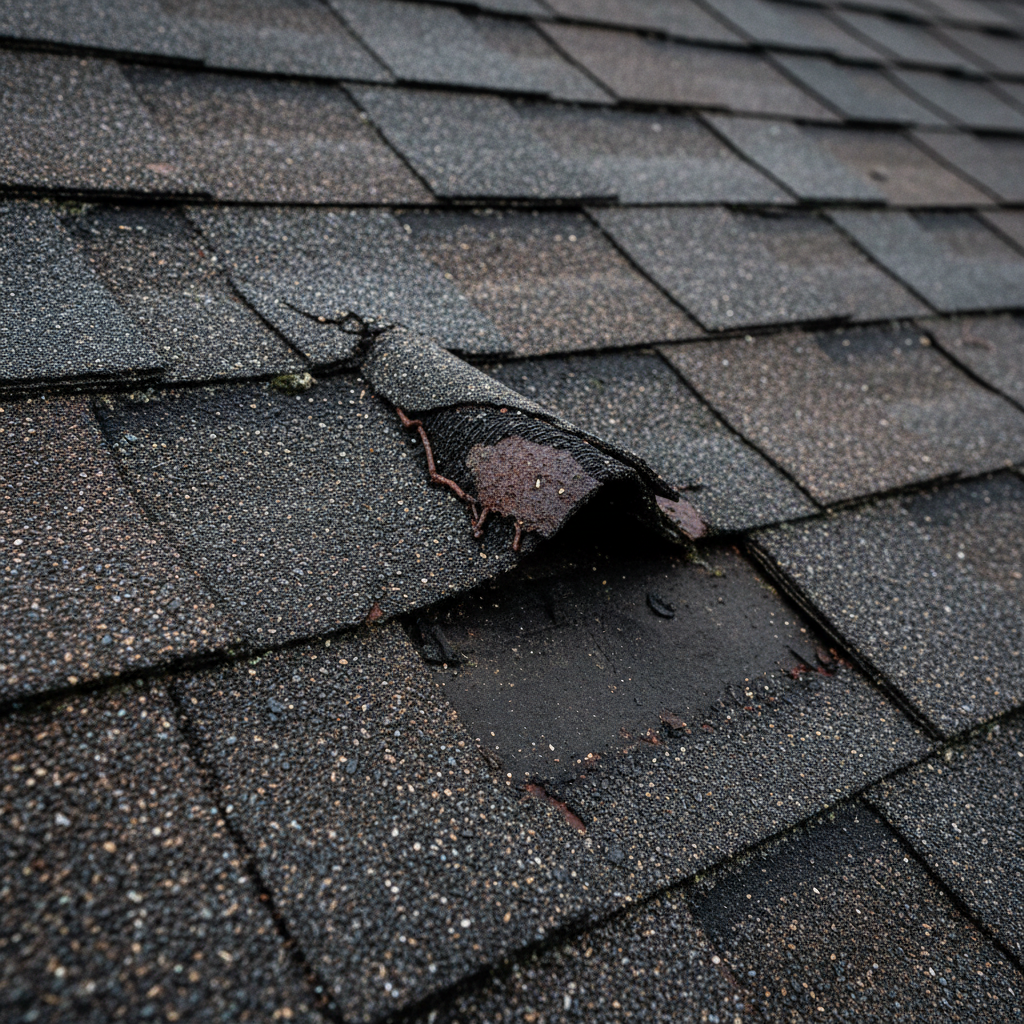
Remember that a lack of interior leaking does not mean your home is unscathed. Hail causes bruising on the underside of the shingle matting that is often invisible to the untrained eye. This structural compromise may take months to manifest as a ceiling stain, but the damage occurs the moment of impact. To ensure you have the evidence needed for a fair payout, you should schedule a storm damage inspection with a professional who has the gear to safely navigate compromised surfaces.
How to Identify Hail Damage from the Ground
Once the skies clear, perform a thorough walk-around of your home's perimeter. You do not need a ladder to find evidence that supports a hail damage roof insurance claim Missouri. Instead, look for "collateral damage," which refers to signs of impact on softer materials around your property. Because roofing shingles are designed to be durable, they often hide damage better than the surrounding components of your home. If these softer surfaces show distress, it is a high probability indicator that your shingles have suffered functional damage as well.
Use this checklist during your inspection:
Gutters and Downspouts: Check the discharge areas of your downspouts for a heavy accumulation of granules. These look like coarse, colored sand and indicate that hail has stripped the protective ceramic layer off your shingles. Also, look for round, thumb-sized dents on the downspout piping.
Window Screens and Sills: Inspect screens for small holes or tears caused by ice impact. Check the metal frames and wooden sills for "pockmarks" or chipped paint.
Air Conditioning Condenser: Examine the thin metal cooling fins on your exterior A/C unit. These are extremely fragile; if they are flattened or dented, the hail had enough force to compromise your roof.
Soft Metals: Look for dents on your mailbox, barbecue grill, metal patio furniture, garage door panels, or if you have broken glass on the ground from damaged garden or deck ornaments.
If you check off more than two items on this list, you have sufficient evidence to take the next step. Rather than guessing the extent of the impact, you should schedule a storm damage inspection to get a professional assessment. These ground-level signs are often the primary indicators adjusters use to validate the severity of a storm event.
Missouri Insurance Basics: ACV vs RCV Explained
Understanding your policy type is the most critical factor in determining your out-of-pocket expenses for a hail damage roof insurance claim Missouri. Most homeowners assume the insurance company simply pays for a new roof, but the reality depends heavily on how your specific policy treats depreciation. In Missouri, policies generally fall into two categories: Actual Cash Value (ACV) and Replacement Cost Value (RCV).
An ACV policy calculates the payout based on the depreciated value of your roof at the time of the storm. If your shingles have a 30 year lifespan but are 20 years old, the insurer will likely only pay for the remaining 10 years of value. On an ACV policy, After subtracting your deductible, the final check might only cover a small fraction of the actual replacement cost. This often leaves Kansas City area homeowners with a massive financial gap to cover on their own. While these policies used to be rare for the area, Missouri insurance carriers have increasingly moved toward ACV-only endorsements for roofs older than 15 years to mitigate their risk.
Conversely, an RCV policy is designed to cover the full cost of replacing your roof with new materials of like kind and quality. While the insurer still subtracts your deductible, they do not penalize you for the age of the roof. Typically, RCV claims are paid in two installments. You receive an initial check for the depreciated value (the ACV portion), and the remaining balance, known as recoverable depreciation, is released once Galaxy Roofing provides an invoice showing the work is complete.
Feature | Actual Cash Value <ACV> | Replacement Cost Value (RCV) |
|---|---|---|
Payout Basis | Market value minus depreciation. Depreciation will have <> around number | Current cost to replace. Depreciation will have ( ) around number. |
Age Impact | Older roofs result in lower payouts | Age does not reduce the total payout |
Out-of-Pocket | High (Deductible + Depreciation) | Low (Deductible only) |
Claim Process | Single payment is usually final | Two-stage payment process |
Before you schedule a storm damage inspection, check your policy Declarations Page for these acronyms. Knowing whether your depreciation is recoverable determines how we structure your restoration estimate. This education ensures there are no financial surprises when the final bill arrives, allowing you to focus on the quality of your roofing warranty details rather than worrying about unexpected costs.
What Not to Say to Your Insurance Adjuster
Navigating the adjuster meeting is a critical juncture in your hail damage roof insurance claim Missouri. While adjusters are generally professional, their primary objective is to document the loss according to strict company guidelines. Providing unsolicited information can unintentionally lead to a claim denial or a significantly reduced payout. You must avoid speculating on the cause or timing of any issues. Never use phrases like "it was probably already old" or "I think it leaked a little before the storm." These admissions allow the carrier to classify the damage as wear and tear or maintenance neglect rather than sudden storm impact.
Be honest about the date of the storm, but do not volunteer a specific roof age if you do not have the original installation paperwork handy. Providing an incorrect guess can negatively impact how they calculate depreciation.
The most effective way to ensure a fair assessment is to schedule a storm damage inspection and (Very Important) have a Galaxy Roofing expert present when the adjuster arrives. We speak their language and can point out subtle bruising or structural compromises that an adjuster might overlook. Having a professional contractor on-site ensures that all collateral damage is identified immediately, preventing the need for frustrating appeals later in the process. This collaborative approach ensures your Lee's Summit property receives a scope of work that reflects the true extent of the storm's impact.
Missouri Specific Roofing Rules: The 25% Rule and Matching Laws
Missouri property owners must navigate a specific regulatory landscape when dealing with a hail damage roof insurance claim Missouri. One of the most influential regulations is the "25% rule," which is often embedded in local building codes across Lee's Summit and surrounding areas. This rule states that if a storm damages more than 25% of a roof surface within a twelve month period, the entire roof must be brought up to current building codes. For a homeowner, this means that even if a significant portion of your shingles are technically intact, the insurance company may be legally obligated to cover a full replacement to ensure the structure meets modern safety standards.
Another critical factor involves Missouri's approach to "matching." Insurers are generally required to provide a product that creates a reasonably uniform appearance. Shingle manufacturers frequently update their color palettes or discontinue specific product lines. If your roof was installed a decade ago and the specific shingle is no longer manufactured, a simple repair would leave your home with a mismatched, patchwork aesthetic. In Missouri, if a matching shingle cannot be sourced, the carrier is often required to replace the entire slope or the entire roof to maintain a uniform look.
Rule Type | Requirement | Impact on Claim |
|---|---|---|
25% Building Code Rule | Damage over 25% requires full code compliance | Often triggers a full roof replacement |
Matching Principle | Requires uniform appearance of materials | Triggers full replacement if shingles are discontinued |
Navigating these technicalities requires an advocate who understands local code enforcement. Before finalizing any settlement, you should schedule a storm damage inspection to determine if your damage crosses these regulatory thresholds. Our team at Galaxy Roofing verifies local ordinances to ensure your claim includes the necessary funds for a code compliant, uniform restoration. This ensures your home retains its market value and curb appeal rather than suffering from an obvious, unsightly repair.
Step by Step Guide to Filing Your Claim

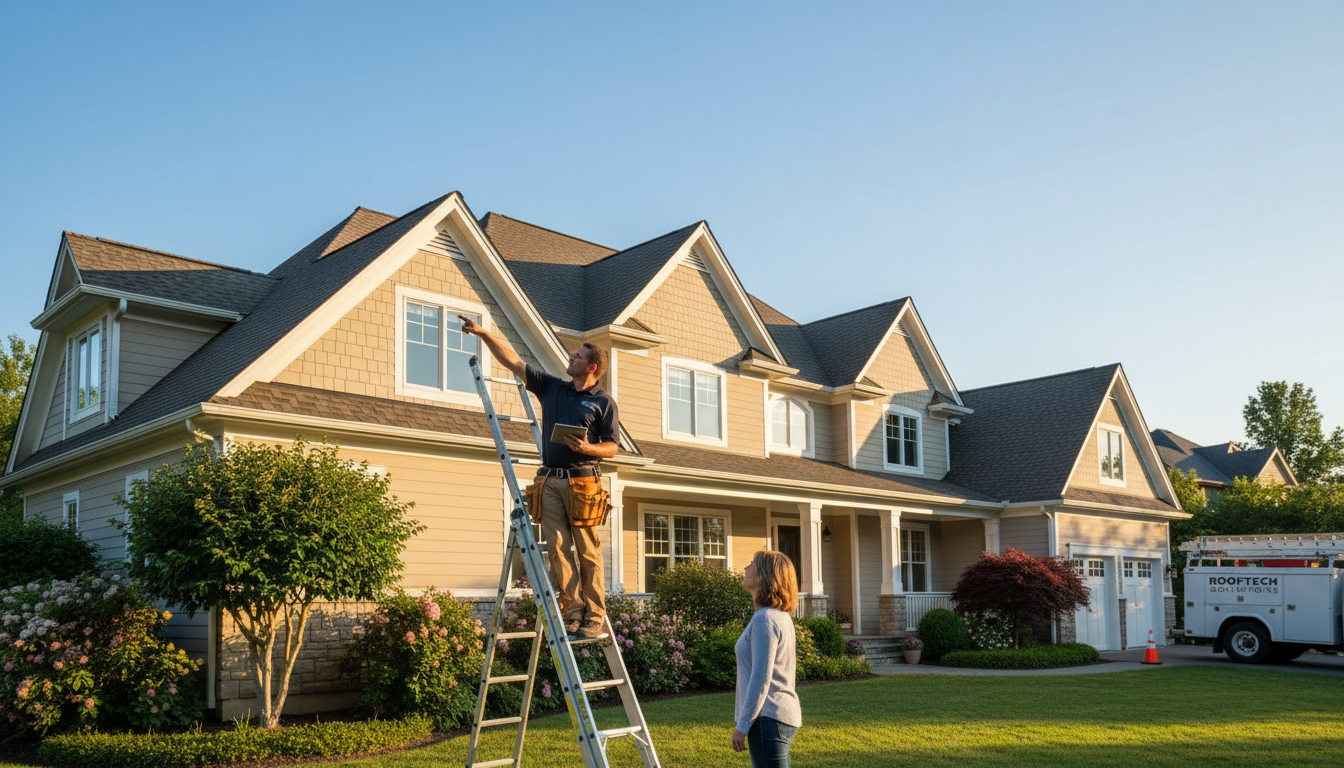
A successful claim begins with professional evidence, not just a phone call to your agent. Before contacting your carrier, you should schedule a storm damage inspection with Galaxy Roofing. We provide a detailed report including high-resolution photos of bruised shingles, soft metal impacts, and any code-related issues that might trigger a full replacement. This documentation acts as your technical blueprint for the entire process.
Once you have our report, contact your insurance company's claims department to initiate the file. In Lee's Summit, most homeowners have a specific window of time, usually one year from the date of loss, to file a hail damage roof insurance claim Missouri, though this is policy-dependent. After filing, the carrier will assign an adjuster to visit your property. It is vital that our team is present during this meeting to represent your interests and point out the specific damage found during our initial assessment, ensuring nothing is overlooked during the walk-through.
Following the inspection, the insurer will issue a Scope of Work (SOW). This document is a line-by-line estimate of repairs and costs. We review this document with you to ensure it covers all necessary materials and labor, including items required by local building codes or matching laws. Once the SOW is finalized and the initial payment is received, the actual restoration begins. This phase transforms the paperwork into physical protection, utilizing high-quality materials and specific roofing warranty details to secure your home against future Missouri storms.
Why Your Roof Claim Was Denied and How to Appeal
Receiving a denial letter from a major carrier like State Farm or American Family can feel like a dead end, but it often marks the beginning of the secondary negotiation phase. In Lee's Summit, many denials hinge on the technical distinction between "wear and tear" and "functional storm damage." Carriers may argue that shingle degradation is merely the result of age or heat blistering rather than hail impact. Additionally, Missouri policies frequently have a strict filing window, often one year from the date of loss. Missing this deadline is one of the most common reasons for an automatic denial of a hail damage roof insurance claim Missouri.
If you believe the initial assessment was flawed, you have the right to request a re-inspection. This process involves the insurance company sending a different adjuster to the property for a fresh look. To bolster your appeal, schedule a storm damage inspection to gather a comprehensive photo evidence packet. This documentation should highlight specific hail fractures and collateral damage that the first adjuster may have overlooked. When the second adjuster arrives, having Galaxy Roofing on-site ensures your interests are represented by an expert who understands local weather patterns and roofing services in Overland Park and Lee's Summit. This professional oversight often provides the technical leverage needed to overturn a denial and secure the funds for your restoration.
Navigating a hail damage claim in Missouri involves documenting the damage carefully and communicating clearly with your insurance provider. While the process can feel overwhelming, understanding your policy and having the right documentation ensures you receive a fair payout for your repairs. If you prefer to have an expert review your roof and guide you through the next steps, our team is ready to assist. You can learn more about our work across various Service Areas to see how we help homeowners restore their properties after a storm.